


Pope Leo XIV’s visit to Africa: A pilgrimage of peace, reconciliation, and hope
Maria Montemayor
Friday, April 10, 2026
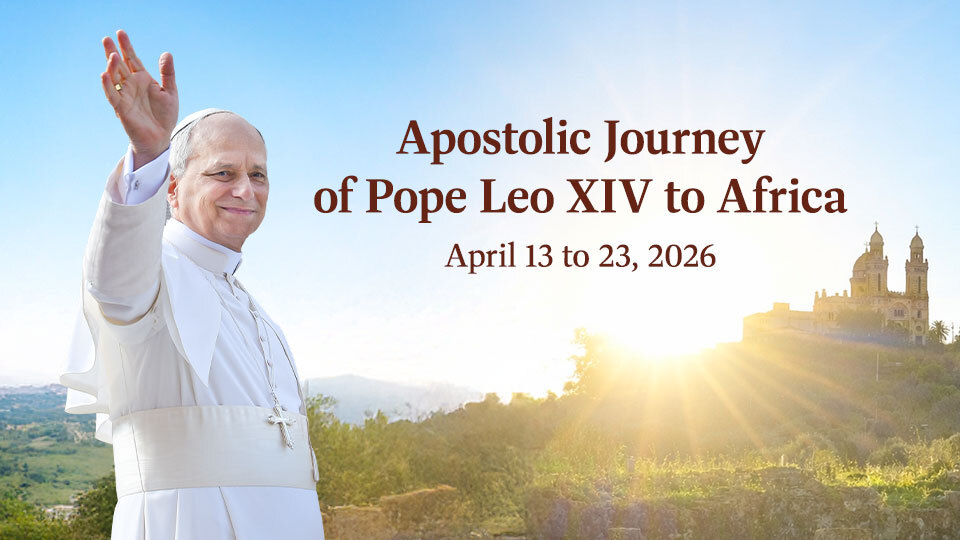
Pope Leo XIV will be making his first apostolic journey to Africa. On his 10-day journey - the longest one so far - he will be visiting four African countries: Algeria, Cameroon, Angola, and Equatorial Guinea. Why is he going to these four countries, and what messages does he hope to bring to them?
Algeria: Walking in the footsteps of St. Augustine
The first country Pope Leo will visit is Algeria, a North African country with ancient Christian roots. Geographically, Algeria is the largest country in Africa. Islam is the state religion, with 99 per cent of its population identifying as Muslim. There are 8,740 Catholics, which comprise about 0.2 per cent of the population. Most of the Catholics are migrants from sub-Saharan Africa. Christians in Algeria, similar to those in Türkiye, face stiff repression: Algerian authorities have closed churches and denied visas to clergy and religious workers. Catholic charities have also faced administrative barriers. In 2018, 19 Catholics martyred during the civil conflict in the 1990's were beatified. Their Beatification Mass was attended by Muslim leaders, indicating some movement towards national reconciliation. The motto for this trip is “As-Salam Alaykum” (which translates to “Peace be with you”), the words of the risen Lord and a common Islamic greeting.
Back in December, the Pope said, “Personally, I hope to go to Algeria to visit the places of St. Augustine's life." On Tuesday he will travel to Annaba, the ancient site of Hippo, and walk the path of St. Augustine, who served as bishop there in the late-4th and early-5th centuries. This holds particular significance, since Pope Leo is a member of the Augustinian order and the first pontiff to visit Algeria. He will likely call for greater interreligious dialogue and share a message of peace throughout this trip.
Cameroon: Promoting unity and peaceful coexistence
The second country on Pope Leo's itinerary is Cameroon, where Catholics are one of the largest religious groups. Catholics comprise about 36% of the population, close to 10 million people, and coexist alongside Pentecostals, Protestants, Muslims, and practitioners of African traditional religions. There are many Catholic primary and secondary schools in this country as well as many Catholic hospitals and clinics. Significantly, its major seminaries and religious congregations are thriving and attracting local candidates. Popes John Paul II and Benedict XVI both visited this country.
The official languages of the country are French and English, although Indigenous languages are also used. In 2016, Anglophones in Cameroon began protesting being marginalized by the Francophone-dominated government. This led to violent measures by security forces in the north-west and south-west regions, regions largely inhabited by the country’s Anglophone minority. In October 2017, Anglophone separatists declared independence in those regions. Since then, clashes between armed separatists and Cameroonian forces have escalated, resulting in more than 6,500 civilians being killed. One of Pope Leo’s visits will be to Bamenda, the epicentre of tensions between separatists and state forces. The motto for his trip to Cameroon is “May they all be one” (John 17:21). This motto can be interpreted as a call for ecumenical dialogue, as well as understanding between separatists and the government. At this stop, the pontiff may emphasize unity, peace, and ethical governance.
Angola: Healing from the wounds of war
The next country Pope Leo will visit is Angola, a predominantly Christian country where about half of its 40 million people identify as Catholic. The official language is Portuguese, although Bantu languages are also spoken. The motto for this trip is “Pope Leo XIV, pilgrim of hope, reconciliation, and peace.” Similar to Cameroon, there are many Catholic primary and secondary schools, hospitals and clinics. Pope John Paul II visited Angola in 1992 and Pope Benedict XVI visited the country in 2009.
Angola was marred by a 27-year civil war that began in 1975 to 2002, and left lasting wounds on the population. Millions were plunged into poverty and thousands of children were orphaned. They became victims of violence, abuse, and exploitation, including becoming child soldiers. The Pope's visit, as hinted by the motto, may address reconciliation and healing for this country still grappling with poverty and economic inequality.
Equatorial Guinea: Flourishing Catholicism amidst poverty
The last African country on Pope Leo's journey is Equatorial Guinea, one of the smallest countries in Africa. It's the only Spanish-speaking country in Africa, which was perhaps a factor in its selection since the pope is fluent in Spanish. Over 81% of its 1.9 million people are Catholic, and Catholic schools and health facilities are supported by the state. Pope Leo XIV will be the second pope to visit this country, after Pope John Paul II visited in 1982. The motto for this visit is “Christ, Light of Equatorial Guinea, Towards a Future of Hope.” This motto highlights the country looking forward to a better future.
After the country became independent from Spain in 1968, it experienced an 11-year communist dictatorship, during which many Catholics were persecuted and public worship was forbidden. Although Catholics are no longer persecuted, the dictatorship was replaced with another one (there is a lack of freedom in elections) and currently, more than 50% of the population live in poverty. Pope Leo's visit will surely lift the spirits of those living in this country.
The current pope visited many African countries back when he was Superior General of the Augustinians, so he understands how sensitive his speeches need to be. The people of all four countries have experienced some form of economic and/or religious hardship, so Pope Leo XIV's presence will signal support, encouragement, and hope for them.
Visit slmedia.org/pope-in-africa for our full broadcast schedule on Salt + Light TV!




Related Articles:
<<
SUPPORT LABEL
$50
$100
$150
$250
OTHER AMOUNT
DONATE
Receive our newsletters
Stay Connected


Receive our newsletters

Stay Connected