


The unifying messages of Pope Leo XIV, Apostle of Peace!
Mireille Haj-Chahine
Saturday, November 29, 2025
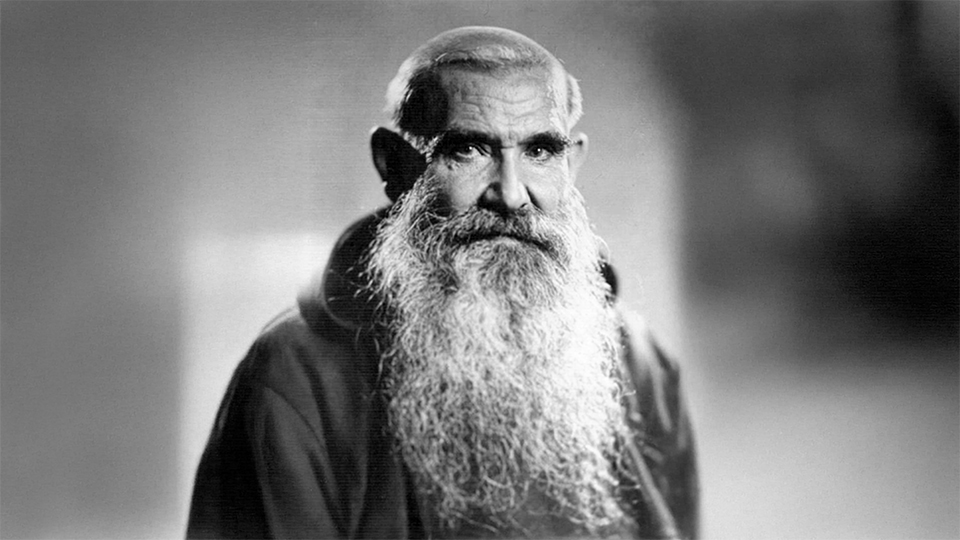
Blessed Yaacoub Al Haddad Al Kabbouchi, OFM Cap, founder of the Deir al Salib Psychiatric Hospital. Pope Leo XIV will visit the hospital on Monday, December 2. Wikimedia Commons.
Six months after his election, Pope Leo XIV has embarked on his first trip outside Italy, visiting Turkey and Lebanon from December 27 to December 2. He is currently in Turkey (also known as Turkiye) to commemorate the 1,700th anniversary of the Ecumenical Council of Nicaea in Iznik. The Council took place in 325 AD and reflects the unity that all Christians can find in the Triune God, as expressed in the Creed. Although Christians make up less than 1 per cent of the population in Turkey, Christianity is coming back to life after a century of violence and persecution.
Tomorrow, he is travelling to the “Land of Cedars and Saints” for his first apostolic visit to Lebanon, my beloved homeland. This visit is of paramount importance for the Lebanese people, our fellow citizens, parents, adults, young people, the sick, and those with disabilities. It follows in the footsteps of Popes Paul VI, John Paul II, and Benedict XVI, who came to Lebanon to deliver a message of peace to the whole Middle East, and especially to a country that has long been ravaged and has suffered greatly.
Pope Francis had hoped to visit Lebanon, but was prevented from traveling due to health issues. He nevertheless held an Ecumenical Prayer gathering for the war-torn country in 2021, entitled: “The Lord God has plans for peace. Together for Lebanon.” His words at the meeting still resonate with the Lebanese people: “Do not be discouraged, do not lose heart, find in the roots of your history the hope to sprout again.”
Pope Leo XIV's visit builds on the legacy of his predecessors, and goes beyond it. He follows the beatitude that says, “Blessed are the peacemakers, for they shall be called sons of God!” (Matthew 5:9). Peacemakers desire to work actively for peace, not only in the absence of war, but also by building harmonious relationships. This is what Pope Leo XIV wishes to do.
Torn apart but strong in their faith, the Lebanese people feel more supported than ever by this visit. Long since united with the universal Catholic Church, With deep roots in both Christian and Muslim faiths, they constantly aspire to a better future. The greatest miracle in the world is that they have remained alive despite the ongoing wars. There is no doubt that faith is the central nerve of our existence! Lebanon deserves to have its truth known and made public. Moreover, the Holy See wants for them a stable, sovereign, independent country where all people can live with dignity and respect for living together!
On November 22, 2025, Lebanon celebrated its 82nd anniversary of independence. The 22nd of the month is doubly dear to the heart of St. Charbel, the monk and extraordinary hermit of the Lebanese Maronite Order (OML), who said to the great miracle worker Nohad El Chami: "Nohad, Lebanon is dedicated to the Sacred Heart of the Virgin Mary.” He added, “Every 22nd of the month, you will go to the Hermitage to pray together.” Lebanon, mentioned 72 times in the Bible, is considered a Holy Land because Jesus walked its paths. Jesus' first miracle at the Wedding in Cana, as recounted in the Gospel of John 2:1-12, took place in what is now southern Lebanon.
Pope Leo’s visit to Lebanon is historic, bringing a message of hope, especially for young people, who need hope to continue living in the country. We are witnessing a continuous exodus of youth who are full of vitality, ability, and productivity. The country is losing them because they are leaving for more peaceful, stable countries! They therefore need faith to believe in a better future for Lebanon. Many of their parents have lost everything, such as from the confiscation of property and the incredible human and physical destruction during the blast at the port of Beirut. Parents also need to believe that there can be hope for their children in this country. That is why the Pope's visit is essential!
A first visit to Annaya
On December 1, Pope Leo XIV will visit Annaya, Lebanon, a key stop on his pilgrimage after meeting with President Aoun, civil and religious leaders, and political leaders. He hopes to be close to the people, to accompany them and bless them on the roads throughout the region. He will even visit the hermitage at Annaya to pray at the tomb of St. Charbel and entrust his visit to the saint, who is said to be present alongside all those who ask for his intercession. The name of St. Charbel attracts the faithful from all walks of life and all denominations, through his life and the hundreds of thousands of testimonies and stories of miraculous healings attributed to him. The faithful flock from all over, seeking peace, comfort, and hope. Non-believers and people who struggle with faith are also invited to visit the hermitage, pray from a distance for divine intercession through St. Charbel, and read the guest book of healings.Relationship between the Vatican and Deir al Salib, and the presence of Abouna Yaacoub!
The Church stands alongside those who suffer and sows hope and love for one's neighbour. On Monday, December 2, Pope Leo XIV will visit the Deir Al Salib Psychiatric Hospital, a place that embodies the meaning of love and humanity on earth. This is the first time that a pope has specifically planned a meeting with the sisters, employees, and patients of this hospital. It is the largest hospital in Lebanon and the Middle East for mental and psychological illnesses. Sr. Samia Sami, a nun of the Cross, said in an interview on the This is LEBANON platform (linked video is in Arabic) that Pope Leo XIV wanted to visit the hospital because the Church is not just for prayer, but also has a mission to support and assist marginalized and forgotten people in our society. He mainly wants to bring back to the forefront of all Lebanese peoples’ concerns the importance of including those who are disadvantaged by life, wounded in their discernment or intelligence, or afflicted with serious illnesses, etc. These are patients who have been abandoned by their parents and, unfortunately, most of the time by the society in which they live. The pope’s visit reinforces the vocation of the sisters and employees who have been working there quietly, joyfully, and lovingly for years, providing not only the care that is necessary, even essential, for the health of the sick, but also ensuring that the space in which they find themselves is one of safety, tranquility, and peace. Sr. Sami calls the patients at the hospital the living treasures or “living relics” of its founder Blessed Yaacoub Al Haddad Al Kabbouchi, a Capuchin priest also known as Jacques Ghazir Haddad. Abouna Yaacoub Al Kabbouchi, who was beatified by Pope Benedict XVI in 2008, welcomed everyone regardless of nationality, ethnicity, or religion. Today, there are more than 800 patients of all nationalities and religions receiving special care and treatment at Deir Al Salib. Pope Leo plans to meet with the sisters, employees, and patients together. He will visit all the beneficiaries of the hospital, including those living with severe physical, mental, and other difficulties, and will inspire them with confidence and hope. The Holy Father reminds each person of their value and importance as sons and daughters of God, and hears their call. Lebanese Catholics are eager for Blessed Yaacoub Al Kabbouchi to be elevated to sainthood. Let us remember that Abouna Yaacoub experienced war, famine, pain, and poverty following in the footsteps of his Holy Father St. Francis of Assissi. He worked tirelessly throughout his life with the grace of God and the Crucified One alongside the sick, the vulnerable, the rejected, those with disabilities, and those wandering the streets. Through this visit, Pope Leo XIV hopes to bring the world together for peace and hope amid conflict. He will encourage the establishment of good, harmonious ecumenical relations, both among Christians and between Christians and Muslims. As part of the spiritual and humanitarian stops on Pope Leo XIV's visit, a new breath of life is generated by the peace and hope received, which can inspire each person to embark on a life animated by a strong faith. You can follow our coverage of Pope Leo XIV's Apostolic Journey to Lebanon starting tomorrow on Salt + Light TV and Salt + Light Plus. Visit slmedia.org/turkiye-lebanon to learn more.
Categories:
Share with friends:



Related Articles:
<<
SUPPORT LABEL
$50
$100
$150
$250
OTHER AMOUNT
DONATE
Receive our newsletters
Stay Connected


Receive our newsletters

Stay Connected