


Jewish-Catholic Dialogue, 60 Years After Nostra Aetate | One Body
Rabbi David Seed and Murray Watson
Tuesday, October 28, 2025

Jewish-Catholic Dialogue, 60 Years After Nostra Aetate
by Rabbi David Seed and Murray Watson
Rabbi David Seed and Catholic Biblical scholar Murray Watson are friends and colleagues. They are also members of the Christian-Jewish Dialogue of Toronto [CJDT], one of Canada’s oldest interfaith organizations, which is celebrating its 50th anniversary this year. Over the course of three weeks in late September and early October (which included the Jewish High Holy Days), the two friends exchanged messages in a back-and-forth conversation about the significance of the upcoming 60th anniversary of Nostra Aetate. The ground-breaking Vatican II declaration on non-Christian religions was approved by Pope Paul VI and more than 2200 bishops on October 28, 1965. The document that eventually became Nostra Aetate started out as a document about Catholic teaching on Jews and Judaism. In its final form, kept its special place for Judaism and the Jewish people, denouncing antisemitism and violence against Jews, stressing the many areas of commonality between Jews and Christians, and summoning Catholics to engage in learning, dialogue, and cooperation with the Jewish community. It is the shortest of Vatican II’s 16 documents, but one of the most theologically significant; it has been the catalyst for a dramatic transformation in Catholic-Jewish relations, and has helped to inspire similar documents from other Christian communities. (For more background on Nostra Aetate and its importance in the context of Vatican II, see Julien Hammond’s One Body post from February 2025 and Julian Paparella’s article marking the 60th anniversary of the opening of the council in October 2022) Murray: Rabbi Seed, I’m really glad for the opportunity for us to exchange ideas — a dialogue in written form — as we get ready to celebrate the sixtieth anniversary of Vatican II’s ground-breaking declaration Nostra Aetate. Those sixty years have certainly been a roller-coaster ride in terms of relations between our two faiths. There is lots of wonderful progress we can point to, and previously-unthinkable advances in Jewish-Catholic relations, but also moments of frustration, pain, misunderstandings, and tensions – some of which we are living through right now. As a rabbi who has been a leader in that dialogue, and intimately involved in it, what are some of your thoughts as we mark Nostra Aetate’s 60th anniversary this year? Six decades after Vatican II, where are we at, and what would you like us (both Jews and Christians) to be thinking about? Rabbi Seed: Murray, thank you very much for asking me to join you in this important dialogue as we reflect on the 60th anniversary of Nostra Aetate that is now upon us. For many, “Nostra Aetate” is not a familiar name; its meaning and significance is not well-known. However, the sea change that it has brought to the relationship between the Roman Catholic Church and non-Christian religions is immeasurable. Though there are continued challenges to that relationship, we have a new understanding since Nostra Aetate of how we can speak, learn, and relate to each other. Murray, if you don’t mind, let me digress for a moment. As you are aware, this coming week, starting Monday night, continuing Tuesday and Wednesday is Rosh Hashanah, the beginning of the new Jewish year of 5786. (This part of the conversation took place in late September. -ed) As we approach the New Year, we are reminded that we can’t move forward in life without looking at the past. I hope that this is what we’ll be able to do as we reflect on the 60 years of Nostra Aetate since its promulgation. Are there moments that stand out for you as we consider the past 60 years of Nostra Aetate? Murray: Thank you for mentioning Rosh Hashanah, Rabbi Seed, and the start of a new year on the Jewish calendar. I know that, for many Jews, the High Holy Days are at least in part a time of introspection and reflection, looking back over the past year and the lessons it has taught us, the good and the bad. As we stand on the threshold of the sixtieth anniversary of Nostra Aetate, I definitely think it’s a good time to look backward, and to appreciate how far our two communities have come over those six decades, hopefully as an inspiration for what can lie ahead. To me, I think that the papal visits to Israel over the last 25 years have really stood out: Pope John Paul II in 2000, Pope Benedict XVI in 2009, and Pope Francis in 2014. Those kinds of papal trips to the Holy Land have become so “commonplace” today that they are hardly newsworthy anymore.Yet I think that, for nearly 1900 years, no Catholic pope after St. Peter had set foot in that Land, the birthplace of both of our faiths. I think of the images of popes praying at the Western Wall in Jerusalem, meeting with Holocaust survivors at Yad Vashem, laying wreaths at the grave of Theodor Herzl. Then I remember the very tense exchange that Herzl had with Pope Pius X in 1904. Herzl had been seeking the pope’s endorsement of a Jewish homeland in the land of their ancestors, and the Pope dismissed the idea, promising instead to have priests ready to baptize any Jews who emigrated there. The Jews of Herzl’s time could never have imagined the dramatic turnaround that has happened in the last 75 years, and especially the 60 years since Nostra Aetate. The change and healing in our relationship over those decades has been nothing short of stunning. Rabbi Seed, what have those decades looked and felt like to you, especially as a leader in the Jewish community? What impact have you seen since Nostra Aetate? Rabbi Seed: Yes, you are absolutely correct and we must always be willing to review the past, but it’s not only for the year gone by. For our purposes, it’s the history that has transpired over the decades leading up to and since Nostra Aetate. For us, it has become a foundational document for the relationship between Catholics and non-Catholics, and in particular for Judaism and the Jewish community. I appreciate your looking back at the visits of three recent popes to Israel (and I hope that Pope Leo XIV will be able to do the same). I’ve often heard from some that acts such as these have little importance. However, I strongly disagree because they represent the continuation of a relationship that began with Nostra Aetate between the Roman Catholic Church and the State of Israel, as the seat of the Jewish people in our day and age. We know that even in the best of relationships, there can be disagreements and different points of view. Nevertheless, the realization of this bond, now seen as unbreakable, is reinforced by visits such as these and concrete acts taken by both Christians and Jews. Speaking of relationships, it’s worth repeating the words of the late Pope John Paul II, who reminded us of these bonds when he famously stated in his 1986 visit to the Great Synagogue in Rome that the Jewish people are “our dearly beloved brothers, and in a certain way, it could be said that you are our elder brothers." Again, in spite of whatever differences there might be between our two communities, there is an unbreakable bond, only made more secure because of the open and frank dialogue between us since Nostra Aetate. Speaking of Jewish holidays, we have just completed Yom Kippur this past Thursday, when we once again experienced the hatred of Jews in Manchester, England. (This was the portion from early October. -ed) I recently read a commentary on the book of Jonah, the prophetic reading chanted during the Yom Kippur afternoon service, by Dr. Shuly Rubin Schwartz, Chancellor of the Jewish Theological Seminary in New York. She so sensitively noted thatThe story of Jonah reminds us that it is precisely in our most challenging moments that God invites us to move beyond our comfort zone and show compassion, concern, and understanding for others, just as God wished Jonah had done with the plant and with the people of Nineveh. Building bridges of understanding and caring in our global and interconnected world with members of other faiths, cultures, and political allegiances honors our recognition of God’s love for all and of everyone’s potential to achieve redemption. It also gives us new opportunities for finding common ground with those who are different from us, who can work alongside us toward a better future.I believe that her words are also built on the work of Nostra Aetate and are more necessary now than they ever have been. Murray, in speaking of recent observances, tomorrow begins the second anniversary of October 7 when 1200 were slaughtered in Israel, and 250 taken hostage (may we see their return speedily). Since then, many in the Jewish community have felt isolated and cast aside by our neighbours and those who we thought were our friends. However, through our open and honest interfaith dialogue during these troubling times, especially in the CJDT, we’ve been able to express our feelings while gaining comfort and support from those of other faiths. It’s made a difference for so many of us to have allies we can count on. Murray, I’ve said a great deal. Any thoughts in response? Murray: Rabbi Seed, I want to thank you for your eloquence and candour, and for your trust in sharing with us some of the pain, trauma, and antisemitic violence that Jewish communities in Israel and in the Diaspora have been burdened with over these last two years. The horrific violence of October 7, 2023 has seared itself into our memories, and I hope, into our consciences. Those two years have seen so much pain and devastation, for Israelis and for Palestinians, and many of us have been praying ceaselessly for an end to that conflict, which would allow both peoples to contemplate what it might look like to rebuild and begin the long, slow process of healing. I know that many Christians have struggled to simultaneously hold together the reality of Israeli pain andPalestinian pain. I know many Israeli and Jewish colleagues feel that the sensitivity felt by many Christians to the physical and human destruction in Gaza has translated into a lack of empathy and compassion for the victims of October 7, and so many others who have been impacted worldwide. I would like to hope that the hearts of all authentically religious people would be large enough to feel compassion for both suffering peoples,and not feel the need to oppose them, or to compare suffering to suffering. But I also realize that, given the very high emotions this conflict has provoked, that may be asking more than many people can offer right now, and I respect that. I hope that, at least, we can avoid the language of hatred and demonization of others which has, sadly, often characterized online conversations (as well as some protests) over the last two years. There is a line in the Jewish liturgy that I have always loved and meditated on: Oseh shalom bimromav, hu ya’aseh shalom aleinu v’al kol Yisrael. V’imru: Amein. (“May the One who makes peace in heaven make peace also for us and for all the people of Israel,” idiomatically referring to all Jewish people everywhere. “And let us say: Amen.”) I also love that, in recent decades, some Jewish communities have chosen to rephrase and expand the ending of that prayer to v’al kol b’nei adam (“and to all of Adam’s children”), or v’al kol yoshvei teivel (“and to all who dwell on Earth”) or v’al kol ha’olam (“and to the whole world”). In a world where so many seem eager to curse others or dehumanize them, I know that our two religious traditions, at their best, call us to something different, to be those who strive for a world of greater justice, peace, and kindness. Without neglecting the pain of the past, including the incalculable pain of the past two years,may we also find ways to work together for a better future for our human family overall, to do the work that Jewish mysticism calls tikkun olam (“the healing of the world”). I can think of no better way to conclude this rich and memorable exchange than with the words of Pope St. John Paul II, one of those who consistently strove to put Nostra Aetate’s vision into practice during his nearly 27-year pontificate:
As Christians and Jews, following the example of the faith of Abraham, we are called to be a blessing to the world (Cf. Genesis 12:2). This is a common task awaiting us. It is therefore necessary for us, as Christians and Jews, to first be a blessing to one another.In the beautiful Hebrew phrase: Ken yehi ratzon: May such be God’s will.
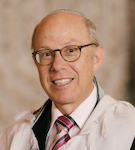 Rabbi Seed is a retired rabbi who served Congregation Adath Israel in Toronto for more than twenty years, a member of the Toronto Board of Rabbis, and a past chair of CJDT.
 Dr. Murray Watson is a Catholic Biblical scholar who works as part of a Catholic school board north of Toronto, and has been involved in Jewish-Christian relations for more than 25 years.
Tags:
Share with friends:



Related Articles:
<<
SUPPORT LABEL
$50
$100
$150
$250
OTHER AMOUNT
DONATE
Receive our newsletters
Stay Connected


Receive our newsletters

Stay Connected