


Our Lady of the Rosary Sets Deep Roots in Trois-Rivières
Peter Rajchert
Friday, September 26, 2025

The Basilica of Notre-Dame-du-Cap in Trois-Rivières, Quebec. Built in 1963, it replaced the Church of Sainte-Marie-Madeleine built in 1880. Photo © Salt + Light Media, 2025.
In 2024, Fr. Luc Tardif, OMI became the rector of Our Lady of the Cape Shrine in the Cap-de-la-Madeleine neighbourhood of Trois-Rivières, Quebec. He was joining a faith community with which he already had a deep relationship.
In the nearly 50 years that Fr. Luc has been a member of the Missionary Oblates of Mary Immaculate, he has visited the shrine many times in his various ministries, including as provincial superior. Now as rector, he is serving the local community and the pilgrims who visit each year. A gentle soul with kind eyes and an easy manner, he greets pilgrims disembarking from buses, celebrates Masses, and gladly obliges folks in the park when they ask him to hear their confession. Fr. Luc is also responsible for fulfilling the countless administrative duties involved in running the shrine: he makes sure that employees receive their salaries, that structures in need of renovation are repaired, and that the shrine has a healthy financial future.
The Oblates have been serving the shrine and the pilgrims who visit it since 1902. Their impact on this holy place over the last 123 years has been significant. They planted the trees in the garden that majestically tower over pilgrims as they prayerfully walk the Stations of the Cross, providing them with shade and fresh air in the summer. They also erected many of the religious monuments on the shrine grounds; designed and built the new shrine church in 1963, including the beautiful stained-glass windows; and welcomed Pope John Paul II along with a congregation of 75,000 pilgrims on September 4, 1984.
 Nowadays, between 200,000 and 400,000 pilgrims from across Québec, the rest of Canada, as well the United States travel to Our Lady of the Cape Shrine to find spiritual sustenance by asking Mary, the Mother of Jesus, to reach out to the Lord on their behalf. This faith community has had a deep relationship with Mary since the 1690s, when Fr. Paul Vachon, the first permanent pastor of what was then known as Sainte Marie Madeleine parish, founded the Confraternity of the Rosary in the community. By praying the rosary together, parishioners grew closer to the Lord through Mary. In the 1860s, Pastor Fr. Luc Desilets also united struggling parishioners through the confraternity. He even discovered a pig had wandered into the church and was chewing on a rosary! Fr. Luc's deep faith and consecration to Our Lady persuaded the parishioners to allow God back into their hearts. Men, women, and children from Cap-de-la-Madeleine who had never attended Mass at Sainte Marie Madeleine also felt drawn to the church and became new parishioners. In fact, so many parishioners joined the faith community that by the late 1870s they could not all fit inside the church building for Sunday Mass. Their only recourse was to build a new, larger church.
The construction process could only begin after builders had transported tools and materials from the south bank of the St. Lawrence River to Cap-de-la-Madeleine. This was only possible over a frozen river, a regular winter occurrence except in the winter of 1879 when this story takes place. Parishioners turned to Mary and asked her for snow and ice in their region so they can transport the construction materials. In March, when many are pondering the arrival of spring, the river current carried ice floes from the west and crashed and piled them onto one another right at Cap-de-la-Madeleine. Parishioners gingerly trod upon this tenuous ice bridge and poured water over it, which froze and strengthened it. Relentless snowfall formed another hard layer on the bridge. As the St. Lawrence swiftly flowed around it, builders transported the tools and materials needed to build the church. The whole community expressed immense gratitude to the Lord and to Our Lady for this ice bridge miracle.
Nowadays, between 200,000 and 400,000 pilgrims from across Québec, the rest of Canada, as well the United States travel to Our Lady of the Cape Shrine to find spiritual sustenance by asking Mary, the Mother of Jesus, to reach out to the Lord on their behalf. This faith community has had a deep relationship with Mary since the 1690s, when Fr. Paul Vachon, the first permanent pastor of what was then known as Sainte Marie Madeleine parish, founded the Confraternity of the Rosary in the community. By praying the rosary together, parishioners grew closer to the Lord through Mary. In the 1860s, Pastor Fr. Luc Desilets also united struggling parishioners through the confraternity. He even discovered a pig had wandered into the church and was chewing on a rosary! Fr. Luc's deep faith and consecration to Our Lady persuaded the parishioners to allow God back into their hearts. Men, women, and children from Cap-de-la-Madeleine who had never attended Mass at Sainte Marie Madeleine also felt drawn to the church and became new parishioners. In fact, so many parishioners joined the faith community that by the late 1870s they could not all fit inside the church building for Sunday Mass. Their only recourse was to build a new, larger church.
The construction process could only begin after builders had transported tools and materials from the south bank of the St. Lawrence River to Cap-de-la-Madeleine. This was only possible over a frozen river, a regular winter occurrence except in the winter of 1879 when this story takes place. Parishioners turned to Mary and asked her for snow and ice in their region so they can transport the construction materials. In March, when many are pondering the arrival of spring, the river current carried ice floes from the west and crashed and piled them onto one another right at Cap-de-la-Madeleine. Parishioners gingerly trod upon this tenuous ice bridge and poured water over it, which froze and strengthened it. Relentless snowfall formed another hard layer on the bridge. As the St. Lawrence swiftly flowed around it, builders transported the tools and materials needed to build the church. The whole community expressed immense gratitude to the Lord and to Our Lady for this ice bridge miracle.
 Construction of the new church started in June 1879 and ended in October 1880. The community consecrated the church to St. Mary Magdalene, taking the name from the 18th century fieldstone church that is today the old Our Lady of the Cape Shrine. On June 22, 1888, Fr. Luc Desilets dedicated the little fieldstone church to Our Lady, Queen of the Most Holy Rosary in front of countless parishioners. The dedication to Our Lady commemorated the ice bridge miracle. At this time, local people began calling the faith community Our Lady of the Cape Shrine.
The old shrine church has its own miracle story
After the crowds had returned home from the rededication Mass and the verdant grounds of the faith community were empty and quiet, a local man named Pierre Lacroix tracked down Fr. Luc as well as Fr. Frederic Janssoone, a recently arrived Franciscan priest, and asked them to open the church. He needed to pray in the house of the Lord. The two priests happily complied and allowed the man inside where they would also pray. At one moment during their prayers, Fr. Luc gazed up at a statue of Mary that stood next to the altar and could not believe what was happening. He turned to his brother priest, Fr. Frederic, and asked if he had seen the statue open her eyes. Fr. Frederic and Pierre had not only seen the statue open her eyes; the two of them noticed that she had a human face. News of this miracle traveled to Québec’s many cities, villages and towns. People understood that Our Lady of the Cape Shrine was a special place where Mary, the mother of Jesus, touched people’s lives.
The miraculous statue of Mary still stands inside the old shrine today. When pilgrims enter the church to pray and reflect, they feel a spiritual lightness and joy. The experience has a powerful impact on their lives that reverberates inside their souls long after they have left Cap-de-la-Madeleine. The parishioners who built this faith home more than 300 years ago found that at that time it also provided the quiet, spiritual escape that they required. Those men, women, and children needed Our Lady’s support in their lives as much as the people of today need it, and those who are not yet born will too.
Peter Rajchert, a father of two, lives in Markham, Ontario. He has spent his career writing stories that celebrate the Roman Catholic Church in all its facets.
Construction of the new church started in June 1879 and ended in October 1880. The community consecrated the church to St. Mary Magdalene, taking the name from the 18th century fieldstone church that is today the old Our Lady of the Cape Shrine. On June 22, 1888, Fr. Luc Desilets dedicated the little fieldstone church to Our Lady, Queen of the Most Holy Rosary in front of countless parishioners. The dedication to Our Lady commemorated the ice bridge miracle. At this time, local people began calling the faith community Our Lady of the Cape Shrine.
The old shrine church has its own miracle story
After the crowds had returned home from the rededication Mass and the verdant grounds of the faith community were empty and quiet, a local man named Pierre Lacroix tracked down Fr. Luc as well as Fr. Frederic Janssoone, a recently arrived Franciscan priest, and asked them to open the church. He needed to pray in the house of the Lord. The two priests happily complied and allowed the man inside where they would also pray. At one moment during their prayers, Fr. Luc gazed up at a statue of Mary that stood next to the altar and could not believe what was happening. He turned to his brother priest, Fr. Frederic, and asked if he had seen the statue open her eyes. Fr. Frederic and Pierre had not only seen the statue open her eyes; the two of them noticed that she had a human face. News of this miracle traveled to Québec’s many cities, villages and towns. People understood that Our Lady of the Cape Shrine was a special place where Mary, the mother of Jesus, touched people’s lives.
The miraculous statue of Mary still stands inside the old shrine today. When pilgrims enter the church to pray and reflect, they feel a spiritual lightness and joy. The experience has a powerful impact on their lives that reverberates inside their souls long after they have left Cap-de-la-Madeleine. The parishioners who built this faith home more than 300 years ago found that at that time it also provided the quiet, spiritual escape that they required. Those men, women, and children needed Our Lady’s support in their lives as much as the people of today need it, and those who are not yet born will too.
Peter Rajchert, a father of two, lives in Markham, Ontario. He has spent his career writing stories that celebrate the Roman Catholic Church in all its facets.
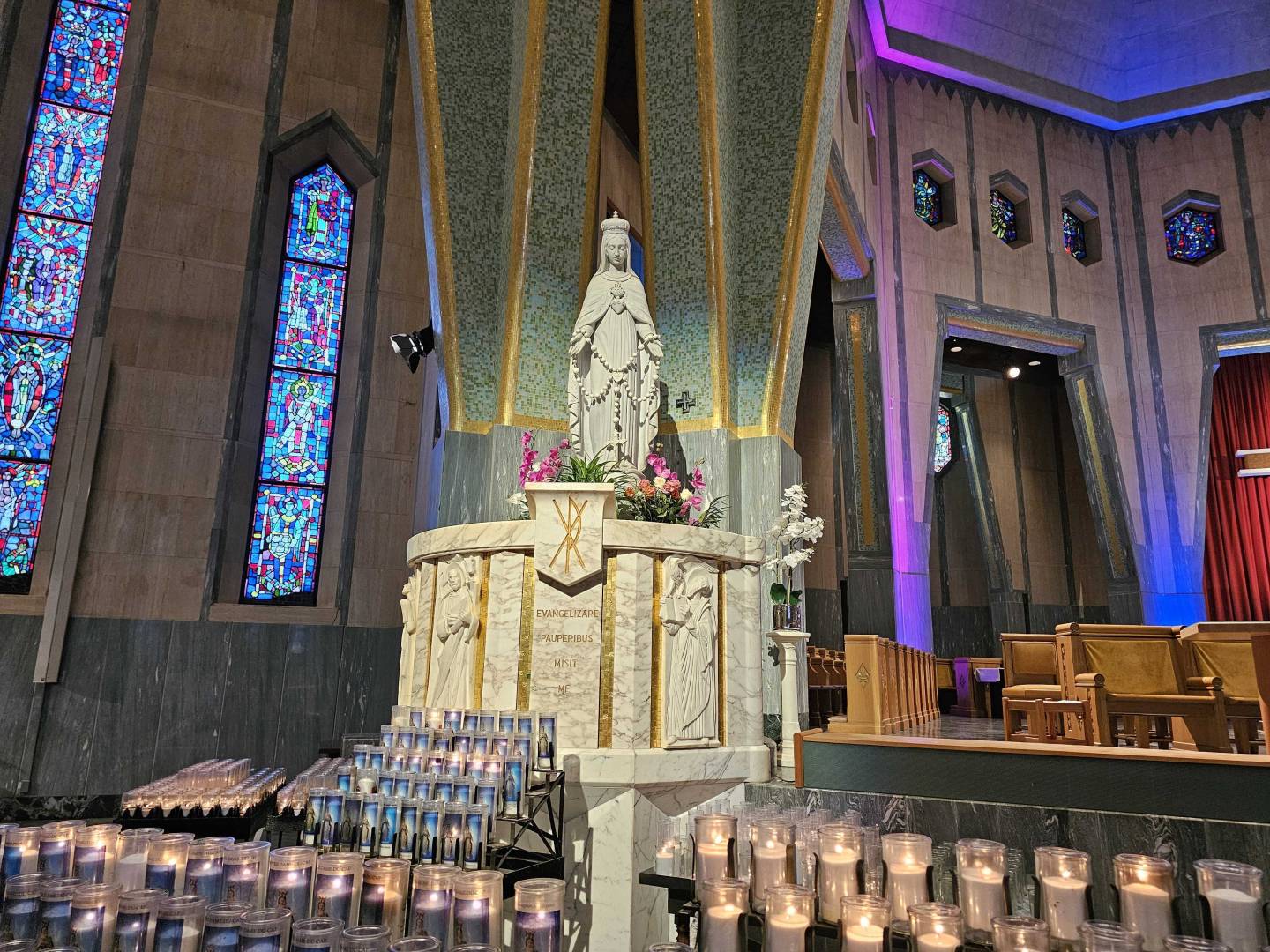
Main statue of Mary in the new basilica. Photo © Salt + Light Media, 2025.
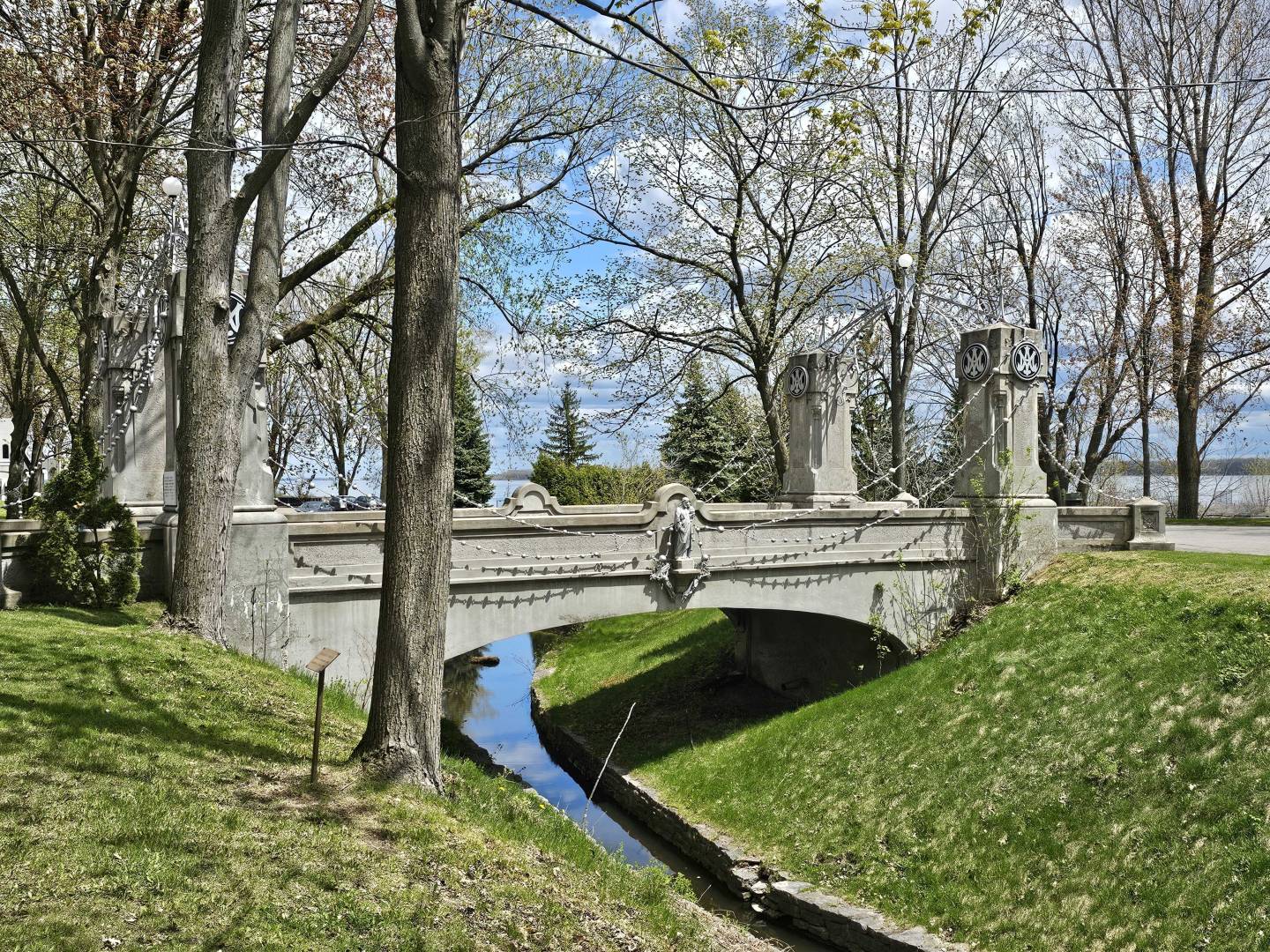
Rosary Bridge on the shrine grounds, near the bank of the St. Lawrence River where the miraculous "ice bridge" built up. Photo © Salt + Light Media, 2025.

Share with friends:




Related Articles:
<<
SUPPORT LABEL
$50
$100
$150
$250
OTHER AMOUNT
DONATE
Receive our newsletters
Stay Connected


Receive our newsletters

Stay Connected