


Introducing the Pre-Chalcedonian Churches | One Body
Sr. Donna Geernaert, SC
Sunday, December 7, 2025

Iconostasis of the Ethiopian Orthodox parish in Rome, at the Church of Sts. Joachim and Anne. Photo from iStock.
Introducing the Pre-Chalcedonian Churches
by Sr. Donna Geernaert, SC
Like the followers of many other faith traditions, Christians maintain that God is mystery, beyond all human words and knowing. Yet, Christians also believe their encounter with God in the person of Jesus and the activity of the Holy Spirit has given them a special revelation about who God is. Central to Christian faith is the belief that in Jesus of Nazareth, God (the Word of God) becomes human. Here is a radical statement, proclaimed in John’s Gospel: “The Word was made flesh and dwelt among us.” (John 1:14) This is the doctrine of the incarnation, from the Latin in carne “into flesh.” This is what we, Christians, are to live and proclaim as good news. Before being recorded in the New Testament epistles and gospels, the living memory of Jesus was passed on orally in the liturgy, preaching, and life of the first Christian communities. Having lived through the events of Jesus’ ministry and humiliating death, the first Christians were well aware of his humanity. In the culture of late antiquity, however, Christianity had to explain Jesus in terms of what people of their day might expect. In particular, they were challenged to explain and gain acceptance for their proclamation that God saves us by means of a human being rather than an angel or heavenly hero. Thus, the theological controversies which marked the first five centuries of the Christian era, initially focused on the divinity of Jesus. The controversies then focused on his humanity, and finally on the relationship between the saviour’s divinity and humanity. The declaration of the Council of Chalcedon (451 AD), which defines Jesus Christ as fully divine and fully human in one person, has remained decisive since its formulation. Far from a theoretical statement, the council’s decree is essentially about salvation: Jesus needed to be fully human to save humanity and fully divine to save humanity. After clarifying its understanding of the divinity of Jesus in the Councils of Nicaea (325 AD) and Constantinople (381 AD), the early Christian community was faced with the question of how his divinity could be related to his humanity. At this point, distinct approaches to this question in the ancient theological centres of Antioch and Alexandria would lead to the first formal divisions in the Church. In Antioch, a focus on maintaining the humanity of Jesus would lead the followers of the monk, Nestorius, to stress the separation of human and divine natures in Christ. For Nestorians, Jesus is personally united to the Word of God, but is not identical to him. This led them to reject the Council of Ephesus (431 AD) with its declaration of Mary as theotokos (“God-bearer”), and gave rise to the Assyrian Church of the East. In Alexandria, on the other hand, a commitment to maintaining the divinity of Jesus would lead Christians in that city to a monophysite position. They claimed that Christ had only one divine nature, and that his humanity was not of the same substance as that of other human beings. This led to their rejection of the Council of Chalcedon as too close to the Nestorian position, and the emergence of the six Oriental Orthodox churches: the Armenian Apostolic Church, the Coptic Orthodox Church, the Ethiopian Orthodox Church, the Syrian Orthodox Church, the Malankara Orthodox Syrian Church and the Orthodox Church of Eritrea. Founded by the apostles or their earliest disciples, these seven pre-Chalcedonian churches (one Assyrian and six Oriental Orthodox) are heirs to some of the richest and most ancient traditions in the Christian world. These churches have often suffered persecution in their home countries, and their members have dispersed widely throughout the Middle East, North and South America, Europe, and Australia. All are committed to the contemporary ecumenical movement. All are members of the World Council of Churches, and since the 1960s have been engaged in a process of rapprochement with both the Catholic and Byzantine Orthodox churches. This text will focus on the renewal of relationships with the Catholic Church, which has taken place through visits between Popes and the Heads of these churches, unofficial theological consultations, and theological dialogues. With increasing numbers of pre-Chalcedonian Christians making their home in Canada, we hope this blog will encourage you to meet your new neighbours.John Paul II meets Mar Dinkha IV
The principal gesture of reconciliation between the Catholic Church and the Assyrian Church of the East occurred in November 1994. Pope John Paul II and the Assyrian Patriarch of the East, Mar Dinkha IV, signed a common Christological declaration, stating: “we experience ourselves united today in the confession of the same faith in the Son of God who became man so that we might become children of God by his grace.” This put an end to a misunderstanding which had lasted since the Council of Ephesus in 431, and initiated the formation of a Joint Committee for Theological Dialogue between the Catholic Church and the Assyrian Church of the East that has held annual meetings since then. In 2001, the dialogue on sacraments led to the publication of Guidelines for Admission to the Eucharist between the Assyrian Church of the East and the Chaldean Church, and Reflections on Admission to the Eucharist between the Assyrian Church of the East and the Chaldean Church. For the Catholic Church (the Chaldean Church is an Eastern Catholic Church), the principal issue in agreeing to the request for admission to the Eucharist in cases of pastoral necessity related to the validity of the Anaphora of Addai and Mari, one of the Eucharistic liturgies traditionally used by the Assyrian Church of the East. In January 2001, the Congregation of the Doctrine of the Faith completed its careful study of this Anaphora and concluded that it can be considered valid, a conclusion approved by Pope John Paul II. In 2024, the Vatican published a commemorative book which brings together the documents that have marked the 30 year history of dialogue since the 1994 common Christological declaration.Reaching out to Oriental Orthodoxy
Early evidence of Catholic interest in renewing relationships with the Oriental Orthodox churches is found in Pope Pius XII’s 1951 encyclical on the 1500th anniversary of the Council of Chalcedon, Sempiternus Rex Christus. In it, he states that “some separated bodies in Egypt, Syria, Ethiopia and elsewhere…go mainly wrong in their use of words defining the doctrine of the Incarnation. This may be demonstrated from their liturgical and theological books” (#26).The Oriental Orthodox churches sent official observers to the Second Vatican Council, and beginning in 1967, popes and heads of these churches have met on several occasions. These visits have led to a number of common declarations, and in 1971, initiated a series of unofficial theological consultations sponsored by the Pro Oriente foundation in Vienna. Throughout these encounters, the Oriental Orthodox have consistently maintained that their Christology is not monophysite but, based on St. Cyril of Alexandria’s theology of “the one incarnate nature of the Word of God,” is more accurately termed miaphysite. This is an important distinction: a monophysite position sees Christ’s human nature absorbed into his divine nature, while a miaphysite position maintains that Christ has one composite nature which is fully human and fully divine. It is now widely agreed by both Catholic and Oriental Orthodox churches that, while differing interpretations of the meaning of the Chalcedonian definition remain, their faith in the mystery of Christ which transcends all formulations is essentially the same. A summary of relationships with individual churches is available on the Dicastery for Promoting Christian Unity website. Highlights of relations with specific churches follow. The Armenian Apostolic Church has developed strong relationships with the Catholic Church. With a long history of persecution and dispersal, the leadership of this church is also somewhat dispersed, between the Catholicosates of Etchmiadzin which is recognized as the first see and Cilicia which retains its administrative autonomy in communion with Etchmiadzin, and the Patriarchates of Constantinople and Jerusalem which are autonomous but dependent on Etchmiadzin. Beginning in 1967 with Cilicia and in 1970 with Etchmiadzin, visits between Armenian prelates and Popes have become increasingly common with representatives from all four jurisdictions attending major Vatican events such as the funeral of Pope Francis and the inaugural Mass of Pope Leo XIV. The 2018 appointment of Archbishop Barsamian as representative of the Armenian church to the Holy See is evidence of a strengthening relationship. Symbolic gestures and actions have strengthened the growing relationship. In 1994, the Prefect of the Congregation for the Oriental Churches delivered the relics of Sts. Thaddeus and Bartholomew to Etchmiadzin. In 2000, the relics of St. Gregory the Illuminator were given to the Catholicos of Etchmiadzin during his visit to Rome. In 2001, Pope Francis added the 10th century Armenian monk St. Gregory of Narek to the calendar of saints. In 2015, the pope declared him a Doctor of the Church, and in 2018 a statue of the saint was erected in the Vatican gardens. Events marking the 1700th anniversary of the baptism of the Armenian People began in Rome in 1999, with a Rome-Armenia exhibition at the Vatican’s Apostolic Library. In 2001, Pope John Paul II travelled to Etchmiadzin where, in addition to various liturgical celebrations, he visited the Dzidzernagapert memorial and paid tribute to the 1.5 million Armenians who were killed in the early 20th century. Cardinal Walter Kasper attended the anniversary celebrations in Cilicia where he delivered a message from the Pope and presented another relic of St. Gregory the Illuminator as a sign of spiritual communion. A further milestone in the relationship can be seen in the Pontifical Liturgy dedicated to the Holy Martyrs of the Armenian Genocide offered by Pope Francis in April 2015. In his homily, the pope clearly named the 1915 Armenian massacres as the first genocide of the 20th century. Common declarations between the Pope and the Catholicos of Etchmiadzin were issued in Rome in 1970, 1996, and 2000, and in Etchmiadzin in 2001 and 2016. The Pope and the Catholicos of Cilicia issued a joint communique in 1983 and a common declaration in 1997. The declarations build on one another, as is evident in the 1970 text which urges theologians “to apply themselves to a common study directed towards a more profound knowledge of the mystery of Our Lord Jesus Christ.” Similarly, the 1996 declaration affirms advances in their Churches’ common search for unity in Christ:Perfect God as to his divinity, perfect man as to his humanity, his divinity is united to his humanity in the Person of the Only-begotten Son of God, in a union which is real, perfect, without confusion, without alteration, without division, without any form of separation.The 1997 declaration makes reference to the 1996 text and goes on to stress the vital importance of dialogue and collaboration in pastoral endeavours. The declaration of 2000 states that the two churches have apostolic succession and true sacraments, especially the priesthood and the Eucharist. Initially drafted by an ecumenical group of Armenian Christians, the resources for the 2026 Week of Prayer for Christian Unity were finalized in Etchmiadzin, October 13-18, 2024. In a region marked by religious diversity and historical tensions, the Armenian Apostolic Church is strongly committed to ecumenical and interfaith dialogue. The Coptic Orthodox Church traces its origins to St. Mark the Evangelist who, according to tradition, was martyred in Alexandria in 68 AD. The patriarchate of Alexandria ranked with Antioch and Rome as one of the chief sees of the early church. The Coptic Church is known for establishing the first specifically Christian educational institution in the School of Alexandria and beginning the Christian monastic tradition. In 1973, the Patriarch of Alexandria, Pope Shenouda III, met Pope Paul VI at the Vatican. At the end of the meeting, a Common Declaration was signed and a Joint International Commission for theological dialogue was created. It held four plenary sessions (1974-1978) devoted to a more precise formulation of Christology, to the way in which full communion might be envisaged, and to pastoral questions. June 1979 saw the publication of Principles for Guiding the Search for Unity between the Catholic Church and the Coptic Orthodox Church and the Protocol Joint to the Principles. The dialogue was interrupted for a decade and then resumed for four more sessions (1988, 1990, 1991, 1992). A Declaration of Agreement on Christology between the Coptic Orthodox Church and the Roman Catholic Church, signed in 1988, states:
We believe that our Lord, God and Saviour Jesus Christ, the Incarnate Logos, is perfect in his divinity and perfect in his humanity. He made his humanity one with his divinity without mixture nor mingling, nor confusion. His divinity was not separated from his humanity even for a moment or twinkling of an eye.”Since 2004, the Coptic Orthodox Church has joined the other five Oriental Orthodox churches in annual meetings of the Joint International Commission for Theological Dialogue between the Catholic Church and the Oriental Orthodox Churches. In 2000, Pope John Paul II visited Pope Shenouda in Cairo. The 2013 visit of Pope Tawadros II to Rome led to the establishment of a Day of Friendship between Copts and Catholics which has met annually since then. In April 2017, a meeting between Pope Francis and Pope Tawadros II in Cairo concluded with a further Joint Declaration. A second visit of Pope Tawadros to Rome took place in May 2023. At that time, Pope Francis announced the inclusion of 21 Coptic Orthodox martyrs to the Roman Martyrology of the Catholic church as a sign of spiritual communion. This growing relationship between the Catholic and Coptic Orthodox churches is also being experienced on a national level. For example, here in Canada, the Canadian Conference of Catholic Bishops and Coptic Orthodox Church have initiated a new bilateral dialogue. This Canadian dialogue will focus on pastoral issues, including marriages between members of the two churches and questions of re-baptism. The Ethiopian Orthodox Church is the most numerous of the Oriental Orthodox Churches, with a membership of more than 30 million. The Church is unique in retaining several Jewish practices, such as circumcision, the observance of dietary laws, and a Saturday sabbath in addition to a Sunday sabbath. The Ethiopian liturgy is of Alexandrian (Coptic) origin, and influenced by the Syriac tradition. Official visits to Rome by the Ethiopian Patriarch took place in 1981, 1993, and 2016. While common declarations were not issued, papal addresses at each of these meetings affirm the unity of faith shared by the two churches. For example, Pope John Paul II’s 1993 address states: “our two Churches in full accord with the Apostolic faith confess both the distinction and the complete union of humanity and divinity in the person of Jesus Christ, Son of God.” In May 2019, an ecumenical conference on Relations between the Ethiopian Orthodox Tewahedo Church and the Catholic Church in Ethiopia was held in Addis Ababa. The Eritrean Orthodox Church was established in February 1994, in an accord with the Ethiopian Orthodox Church. The agreement, signed in Addis Ababa, reaffirmed the autocephalous (self-governing) status of both churches and recognized a primacy of honour of the Coptic Church among the Oriental Orthodox Churches in Africa. The Syrian Orthodox Church traces its origins to the early Christian community at Antioch. In the 6th century, the Bishop of Edessa, Jacob Baradai, ordained many bishops and priests to carry on the faith of those who rejected Chalcedon. Consequently, this Church became known as “Jacobite,” with its own liturgy and other traditions using the Syriac language spoken by the common people. Relations between the Syrian Orthodox Church and the Catholic Church are well developed. A 1971 visit between the Syrian Orthodox Patriarch of Antioch and All the East and Pope Paul VI resulted in a Common Declaration which affirms that: “there is no difference in the faith they profess concerning the mystery of the Word of God made flesh and becoming really man, even if over the centuries difficulties have arisen out of the different theological expressions by which this faith was expressed.” A Common Declaration between Pope John Paul II and the Patriarch of the Syrian Orthodox Church was signed June 23, 1984. It proclaims the identity of the faith of both Churches in the areas of Christology, the church, the holy eucharist and the sacraments. While the differences that exist do not permit the restoration of full communion, the faithful are allowed to receive the sacraments of penance, eucharist, and anointing of the sick from lawful priests in either of our two churches, when they need them. As a clear expression of the degree of trust between the two Churches, Syrian students are regularly sent to Rome to pursue their theological formation in the Pontifical Universities and Institutes. In May 2001, Pope John Paul II visited Syria where he was welcomed by the Patriarch who accompanied him throughout the visit. On the afternoon of May 6, the Pope met with clergy, religious, and laity of both Catholic and Orthodox Churches in Saint George of Damascus Syrian Orthodox cathedral. The Malankara Orthodox Churches The Malankara Orthodox Church, whose tradition dates back to the Apostle Thomas, divided into two distinct communities in 1975: 1) the Malankara Orthodox Syrian Church became autocephalous; and 2) the Malankara Syrian Orthodox Church remained autonomous under the authority of the Syrian Orthodox Patriarch of Antioch, The disagreement with these two Malankara Orthodox Churches is not of a doctrinal nature, but over their relationship with the Patriarchate of Antioch. After the 1986 pastoral visit of Pope John Paul II to India, dialogue was initiated with the Malankara Orthodox Syrian Church in 1988 and with the Malankara Syrian Orthodox Church in 1990. The Malankara Orthodox Syrian Church The members of the Joint International Commission for Theological Dialogue between the Roman Catholic Church and the Malankara Orthodox Syrian Church met for the first time at Kottayam, Kerala, in October 1989. They put an end to the christological disagreement which existed between them by unanimously adopting a common text concerning their faith in the mystery of the incarnate Word. This doctrinal agreement was submitted to the authorities of the two Churches, who approved it and decided that it should be made public on June 3, 1990. The Statement of the Joint Commission between the Roman Catholic Church and the Malankara Orthodox Syrian Church is considered by experts in Christology to be one of the most precise and most complete among statements of its kind. At its eleventh meeting in October 1999, two press releases were published: 1) on the occasion of the fourth centenary of the Synod of Diamper, 2) on attacks against Christians. At its September 2000 meeting, the Joint Commission accepted a statement on inter-church marriages and forwarded it to the competent authorities in the two Churches. To facilitate access to the working documents discussed in previous meetings, the Commission has published a volume of Papers and Joint Statements, 1989-2000. The Commission has continued to meet annually with reports issued following each meeting. Visits to Rome by the Catholicos of the Malankara Orthodox Syrian Church have taken place in 1983, 2013, and 2023. The Malankara Syrian Orthodox Church The first meeting of the Joint Commission for dialogue between the Catholic Church and the Malankara Syrian Orthodox Church of India was held in Ernakulum, Kerala, in October 1991. Because of the urgency of problems of a pastoral nature, the dialogue commission agreed to examine the question of inter-church marriages. In light of the Common Declaration signed in 1984 by Pope John Paul II and the Syrian Orthodox Patriarch of Antioch, the joint commission arrived at an Agreement between the Catholic Church and the Malankara Syrian Orthodox Church on Inter-Church Marriages, which was published in January 1994. A Joint Statement on Episcopacy and Petrine Ministry was issued in 2002, and an Agreement on Sharing of Sacred Places was published in 2011. The Commission has continued to meet annually; items discussed at the 2024 meeting included: ecumenical collaboration in the digital world for faith formation and youth ministry, migration and its effects on the Kerala churches, and a revised paper on ecumenical collaboration in pastoral care in university and hospital chaplaincies.
Concluding Thoughts
The current relationship between the Catholic and Pre-Chalcedonian Churches is unique. In a series of common declarations, the leaders of these churches have given official approbation to the resolution of the Christological divergences at the source of their historical divisions. By avoiding language that had been controversial in the past, these leaders have repeatedly asserted that their faith in Christ is the same. To so unequivocally overcome a dogmatic dispute of this type is an unprecedented ecumenical achievement. Differences remain, especially in the area of ecclesiology, but the Christological agreement has enabled some of these churches to allow reciprocal sharing in the sacraments of penance, Eucharist and anointing of the sick.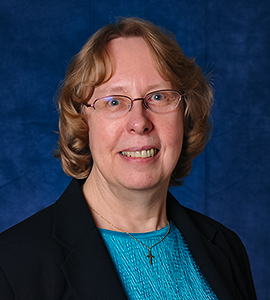 Sr. Dr. Donna Geernaert, SC, served for 18 years in promoting ecumenical and interfaith relations for the Canadian Conference of Catholic Bishops. She has been a staff member, consultant, and member of numerous multilateral and bilateral theological dialogues in Canada as well as internationally.

Categories:
Tags:
Share with friends:




Related Articles:
<<
SUPPORT LABEL
$50
$100
$150
$250
OTHER AMOUNT
DONATE
Receive our newsletters
Stay Connected


Receive our newsletters

Stay Connected