


Friendship in the Ecumenical Movement | One Body
Julien Hammond
Saturday, June 6, 2026

Friendship in the Ecumenical Movement
by Julien Hammond
Just as I was sitting down to write this article, the Vatican News Service reported that Pope Leo XIV had shared a phone call and sent a letter to his apostolic brother, Pope Tawadros II of Alexandria, marking the annual Day of Friendship between the Coptic Church and the Catholic Church. “This Day of Friendship,” Pope Leo wrote in the letter,whose idea originated with Your Holiness, celebrates the relations between the See of Peter and the See of Mark, and is indeed a significant initiative. For us Christians, friendship is not a vague sentiment; it is at the very heart of our life and faith. For our Lord himself calls us his friends (cf. John 15:15), and he teaches us that “no one has greater love than this, to lay down one’s life for one’s friends” (15:13). Thus it is by drawing upon Christ’s friendship with us that we will be able to strengthen the friendship between ourselves, and between our Churches, as we continue to bear witness together to the divine philanthropia for all humanity!I must admit that prior to reading this news article, I had never heard of the Day of Friendship between Copts and Catholics, even though such days had been happening for more than a decade. They were started back in 2014 by Pope Tawadros and Pope Francis to mark the anniversary of their first meeting in Rome, which was itself already a commemoration of the 40th anniversary of the historic encounter between Pope Paul VI and Pope Shenouda III in 1973. How wonderful to imagine that a friendship that began between two popes more than 50 years ago continues to this day through their successors, and through the adherents of both churches, responding to the prayer of Jesus “that all may be one”. Interpersonal relationships and deep, abiding friendships are central to the Ecumenical Movement, and there are copious examples of such friendships that have developed between ecumenists. Sometimes these are expressed through meaningful words or gestures exchanged either publicly or privately. Sometimes they are seen as acts of solidarity or silent standing together in the face of a tragedy or an injustice perpetrated in society. Often ecumenical friendships emerge as ecumenists spend time getting to know one another after years of estrangement and separation. Fr. Dragos Herescu, a Romanian Orthodox priest and principal of Cambridge, UK’s Institute for Orthodox Christian Studies, recalled that:
The late Metropolitan Kallistos Ware (1934-2022), who was simultaneously a deeply ecumenical and utterly orthodox Orthodox bishop, would often quote with great satisfaction and almost as his own, the words of the Belgian Cardinal Leo Jozef Suenens (1904-96): “If we are to unite, we must first love one another. If we are to love one another, we must first get to know one another.”While the Catholic Church continues to use gendered language like fraternity, brotherhood, and kinship to express relationships between the churches, these words are intended to express a relationship of warmth (aka friendship) between the churches or at least church leaders. In fact, their use in ecumenical statements, and indeed in encyclical letters and other official documents of the Church, conveys a significant message: Christian leaders and ecumenists generally have replaced a once hostile language to refer to one another, with a much more relational language, describing a relationship with fellow believers that is rooted in friendship, in Jesus Christ. Pope John Paul II wrote about this in Ut Unum Sint:
It happens for example that, in the spirit of the Sermon on the Mount, Christians of one confession no longer consider other Christians as enemies or strangers but see them as brothers and sisters. Again, the very expression separated brethren tends to be replaced today by expressions which more readily evoke the deep communion — linked to the baptismal character — which the Spirit fosters in spite of historical and canonical divisions. Today we speak of "other Christians," "others who have received Baptism," and "Christians of other Communities." The Directory for the Application of Principles and Norms on Ecumenism (#5) refers to the Communities to which these Christians belong as "Churches and Ecclesial Communities that are not in full communion with the Catholic Church" (Ut Unum Sint #42).He then reflected on the importance of this change:
This broadening of vocabulary is indicative of a significant change in attitudes. There is an increased awareness that we all belong to Christ. I have personally been able many times to observe this during the ecumenical celebrations which are an important part of my Apostolic Visits to various parts of the world, and also in the meetings and ecumenical celebrations which have taken place in Rome. The "universal brotherhood" of Christians has become a firm ecumenical conviction. Consigning to oblivion the excommunications of the past, Communities which were once rivals are now in many cases helping one another: places of worship are sometimes lent out; scholarships are offered for the training of ministers in the Communities most lacking in resources; approaches are made to civil authorities on behalf of other Christians who are unjustly persecuted; and the slander to which certain groups are subjected is shown to be unfounded. In a word, Christians have been converted to a fraternal charity which embraces all Christ's disciples (ibid.).Someone who has written extensively on this topic is Fr. Tom Ryan, CSP, a Paulist priest from the USA with significant ties to the Canadian Centre for Ecumenism. For Fr. Ryan, “ecumenical gatherings need to build into the schedule time that encourages social inter-action between people. The coffee break or social hour before dinner may have more significant impact in bridge-building than the long theological discussions that went on during the afternoon formal dialogue.”
In friendship, the informal “dialogue of life” often takes precedence over the more formal dialogue of religious exchange and theological discussions. People come to know each other not only as official representatives of their church communities, but as fellow human beings and as sisters and brothers in Christ. Fr. Ryan explains:
Learn More: Living Ecumenism: Communion in Mission | Sr. Donna Geernaert, SC Sr. Donna reflects on the origins and context-driven method of the International Anglican-Roman Catholic Commission for Unity and Mission. Spotlight on Catholic-Mennonite Dialogue | Julien Hammond Julien Hammond explores the ways that Catholics and Mennonites have learned from each other and grown together in dialogue.
Church representatives have often experienced how a conversation in a bus from the airport to the hotel where a conference is being held, or chatting after a meeting while waiting for a flight, can result in collaboration months later. The subject discussed may have no relationship to the conference or dialogue theme, but the personal contact sets up a climate of trust that is the safety net for the whole ecumenical enterprise.Ecumenism requires that we avoid cliquishness and remain open to an ever-widening circle of friends. Dialogue partners come and go according to the natural cycle of terms served by their members. As in all facets of our lives, fresh faces appear bringing new gifts to the table and familiar faces disappear carrying new learning to other tables. I’ll conclude with Fr. Herescu’s words:
Ecumenical friendship is, at its most elementary, about getting to know one another – about being genuinely curious and fascinated about one another. This requires generosity and a form of positive humility. It is the first and vital step towards growing to love one another. Mutual love is the pre-condition for the realisation of unity. This is to say that when we have begun to love one another, we will have reached the unity, for which Christ continually prays, and to which he calls us, as part of our fraternal repentance.
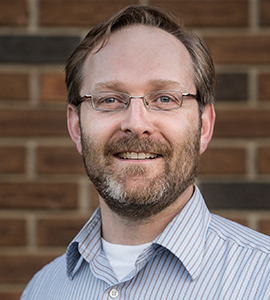 Julien Hammond has been the ecumenical officer for the Catholic Archdiocese of Edmonton for over twenty years. He has served as a member of the Roman Catholic-United Church of Canada Dialogue, the Anglican-Roman Catholic Dialogue in Canada, and the Christian Church (Disciples of Christ)-Roman Catholic International Consultation. He is currently a member of the Jewish-Catholic national dialogue, co-sponsored by the Canadian Rabbinic Caucus and the Canadian Conference of Catholic Bishops.




Related Articles:
<<
SUPPORT LABEL
$50
$100
$150
$250
OTHER AMOUNT
DONATE
Receive our newsletters
Stay Connected


Receive our newsletters

Stay Connected